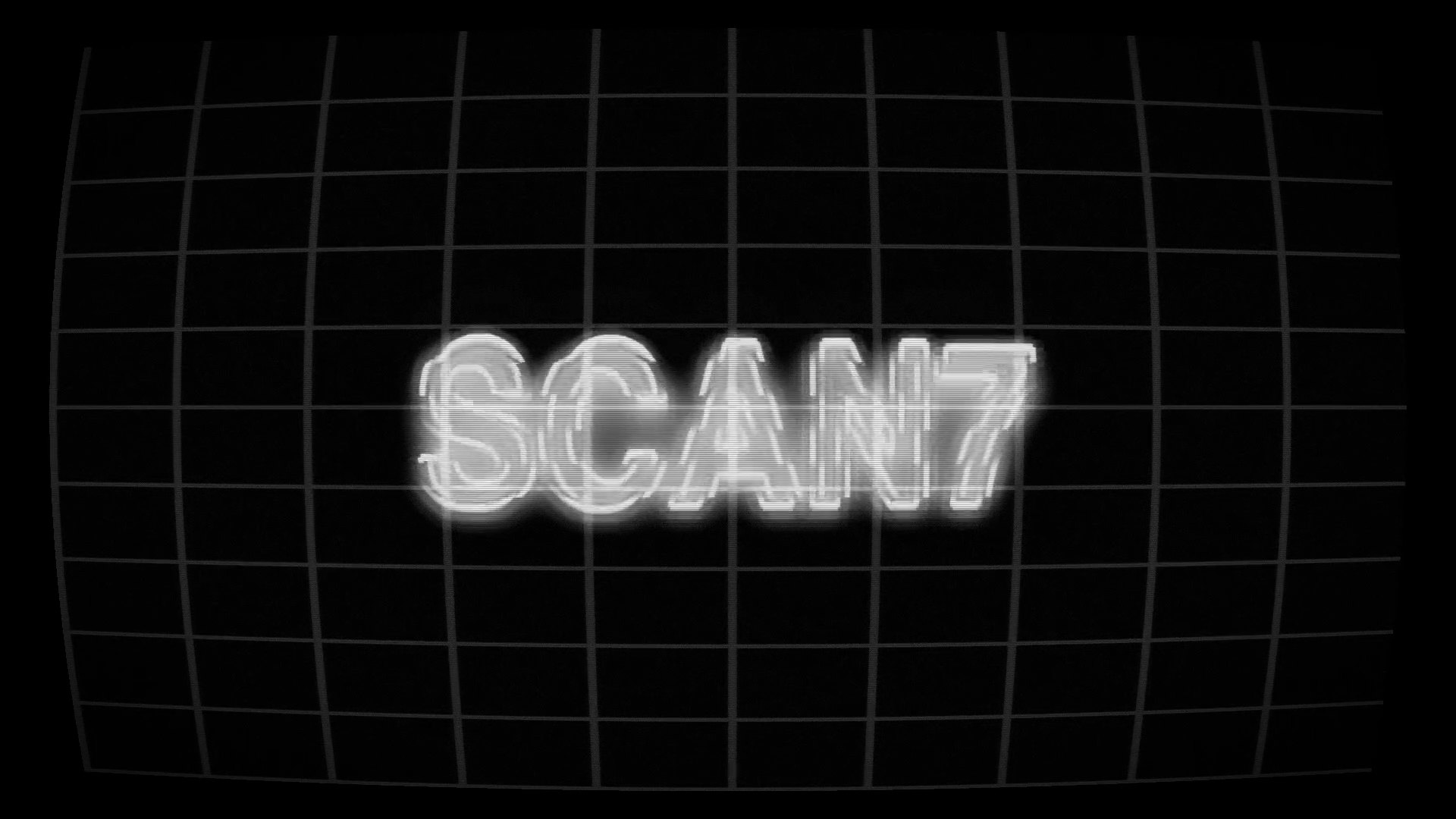
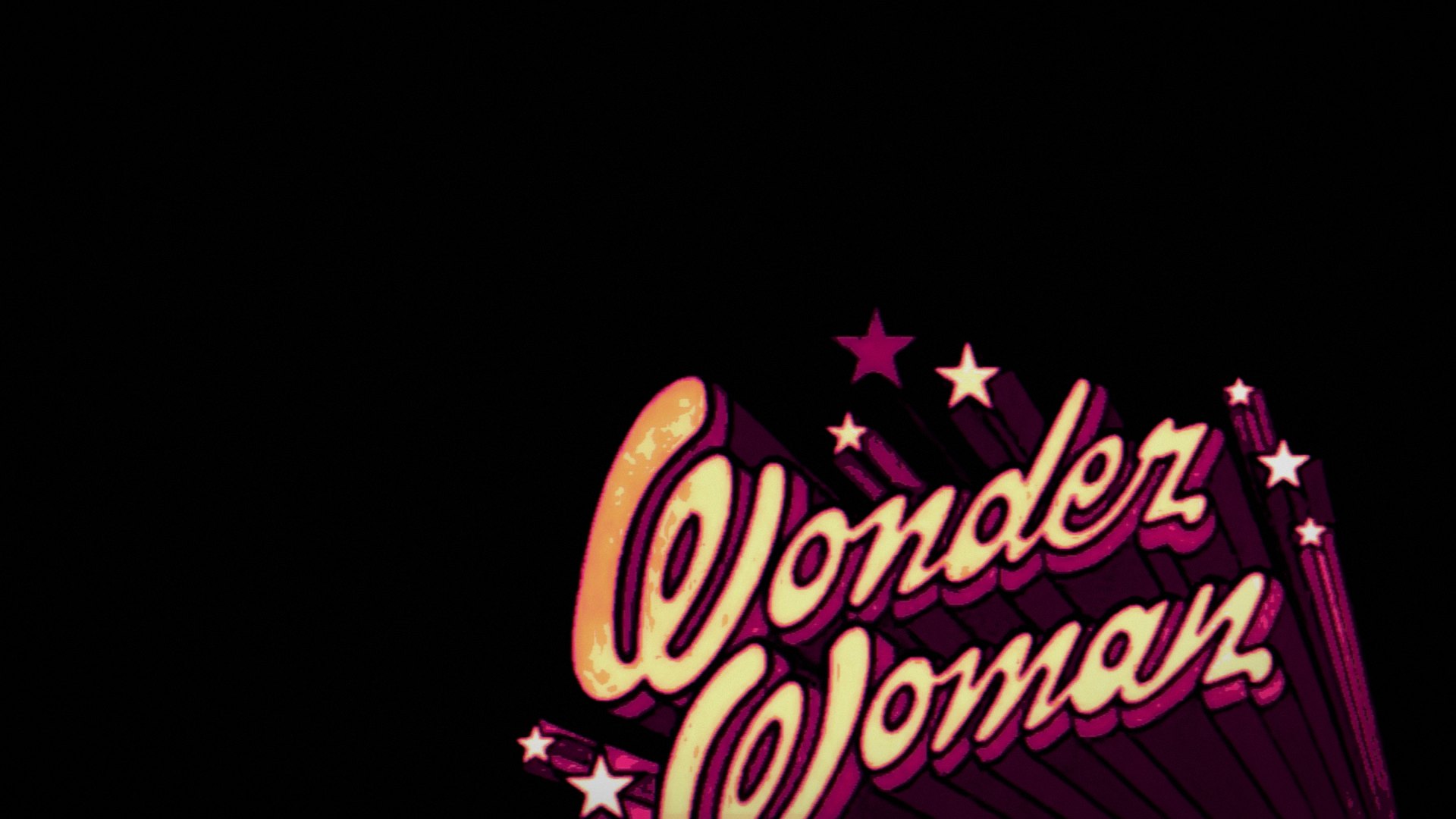
Scanimate analog animation for your titles and pictures. A title, a shape, a video or a camera goes through the hi-con camera, scan deflection, banded colourizer and phosphor persistence — on three layers, in real time — and exports to .mov exactly as previewed.
In the late sixties, Computer Image Corporation developed the Scanimate: a high-contrast black-and-white card filmed by a high-resolution camera, displayed on a tube whose scan was deflected by an analog computer, then colourized level by level and recorded to tape.
About ten machines produced most of the television motion design of the seventies: rippling chrome letters, logos tumbling in pseudo-3D, rainbow bands. Dave Sieg, who maintains the last two units, calls it "the visual equivalent of a Moog synthesizer".
SCAN7 reproduces that chain stage by stage and runs it at 60 frames per second on your Mac's GPU. The source is a title set inside the app, a video, an image, the camera, an electronic pattern or an animated shape.
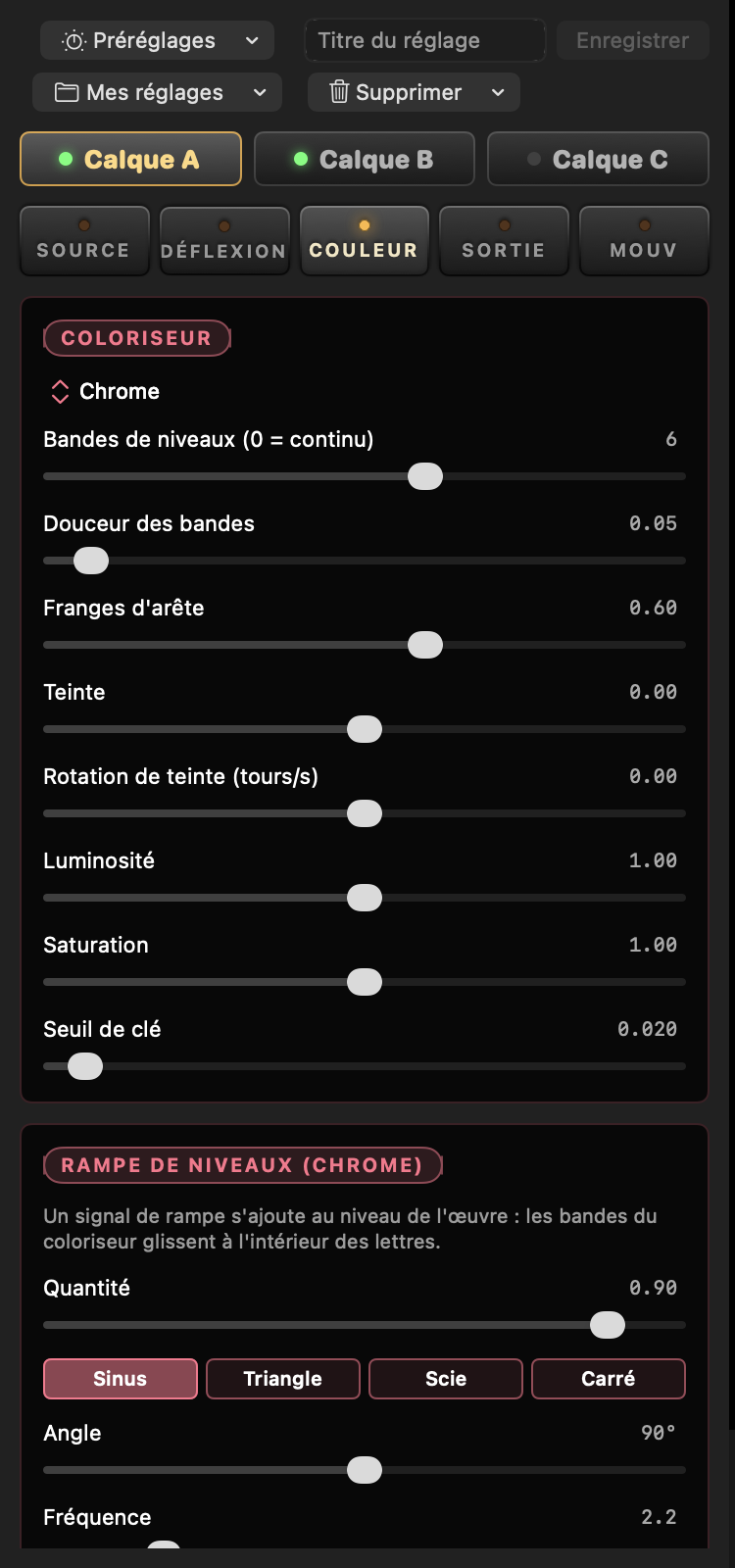
The level ramp slides colour bands inside the letters — the chrome of the title sequences. Three layers A, B and C, each with a full chain, blend like the tape overlays of the period. Twenty-eight presets, export identical to the preview.
English interface — French available
Each stage takes a link of the Scanimate chain — or adds what the analog machine could not.
A title set inside the app (font, weight, size, tracking, outline), a video, an image, the camera, an electronic pattern or an animated shape. A cut-out PNG inserts a logo through its transparency.
Threshold, softness, gamma, negative and edge extraction: the original high-contrast black and white.
Position, size, rotation, shear, pseudo-3D tilts: deflection moves and warps the image like the Scanimate's analog ramps.
Cylinder, sphere or cushion, twist — to wrap the title through space.
Sine, triangle, saw and square acting on fifteen axes of the geometry and the colour.
Colour bands slide inside the letters: the chrome of the title sequences, the Scanimate signature.
Twelve palettes, level bands with edge fringes, hue and hue rotation.
Glow and persistence imitate the tube's phosphor, with zoomed, drifting and tinted echoes.
Three layers A, B and C, each with a full chain, blend by key, addition, screen or multiply — like the tape overlays of the period.
Curvature, bandwidth, chromatic aberration, scan lines, noise, flicker, vignette.
Two state memories, a manual T-bar or an automatic ramp with duration, loop, back-and-forth and curve.
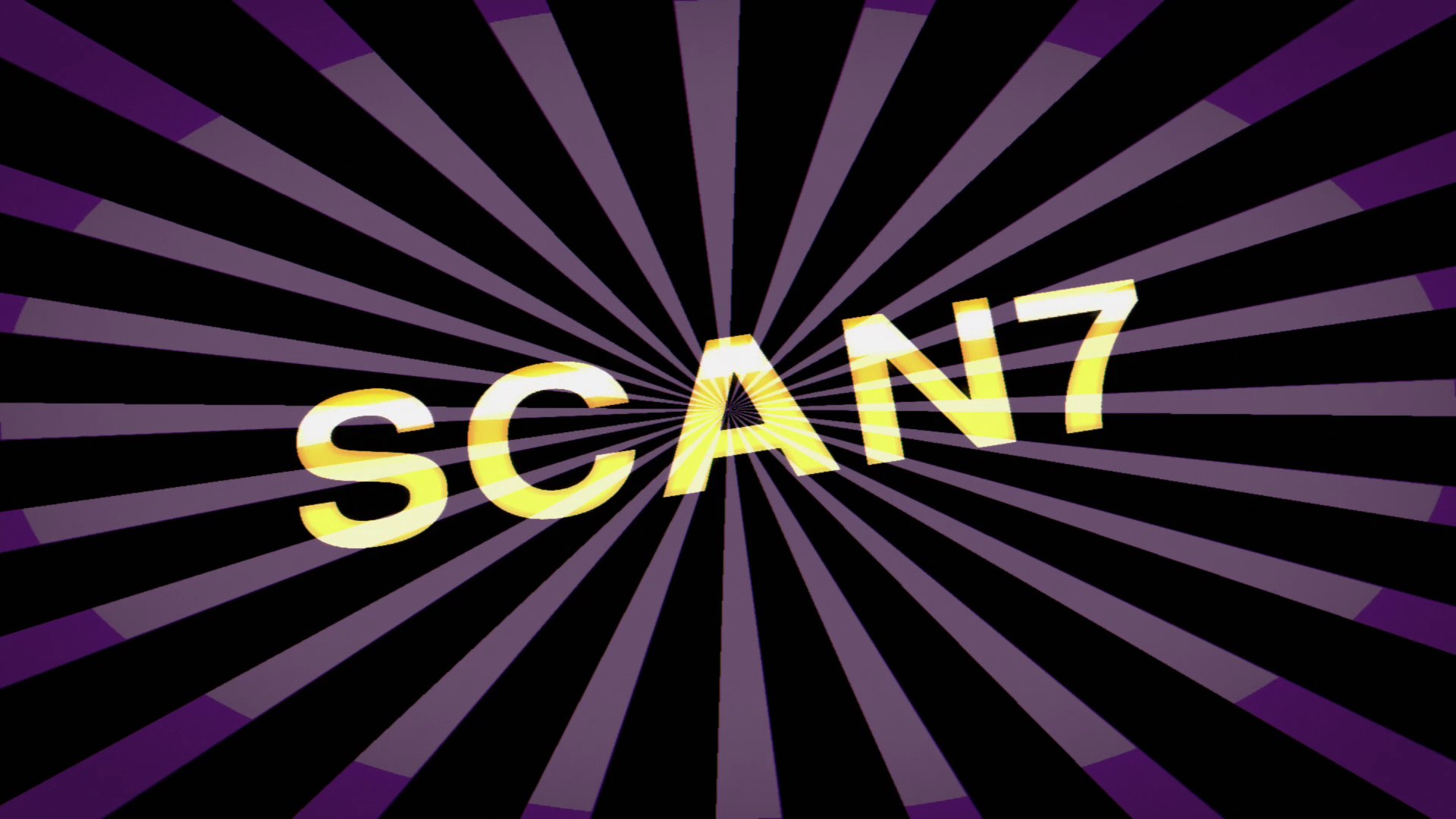
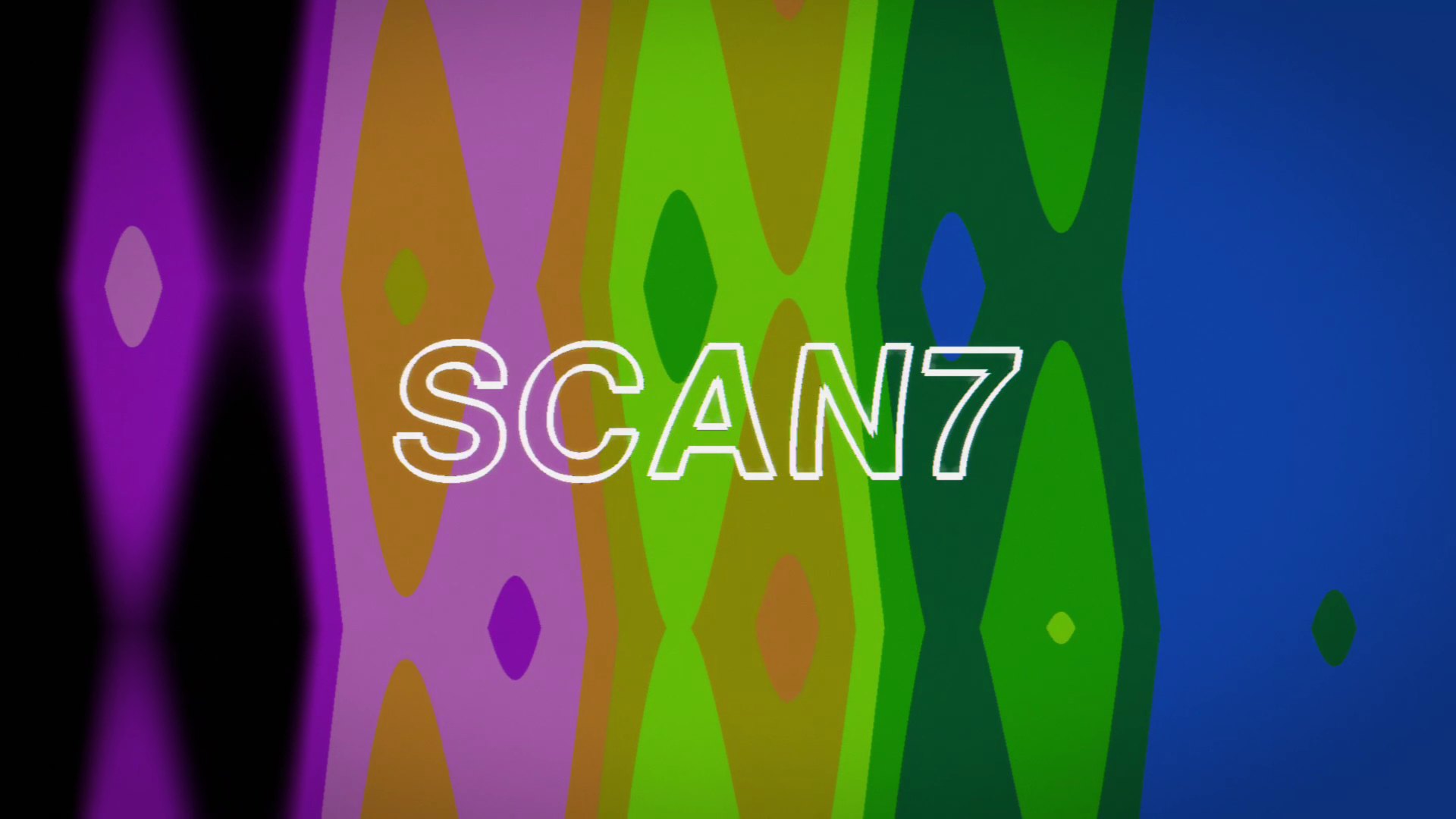
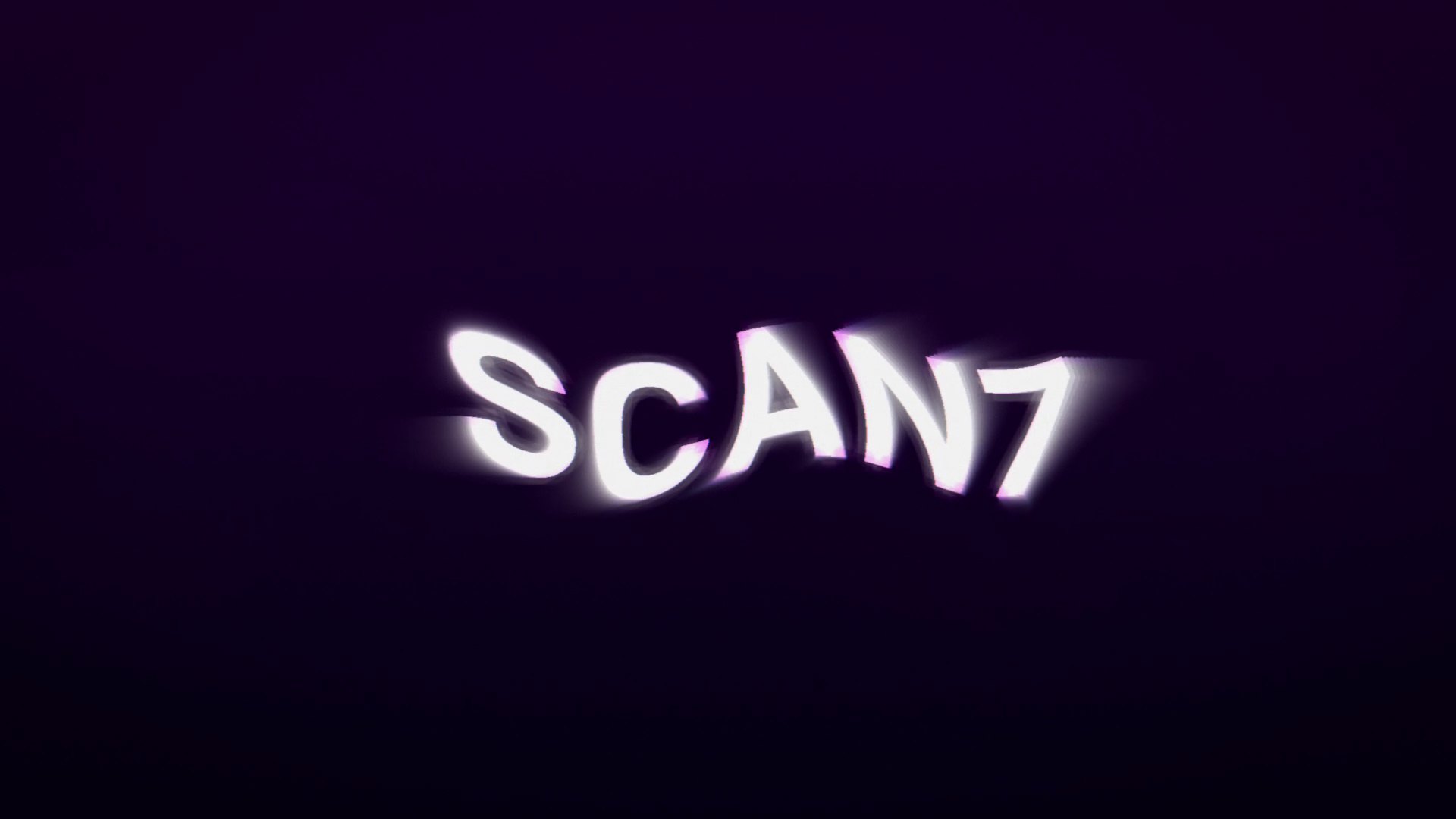
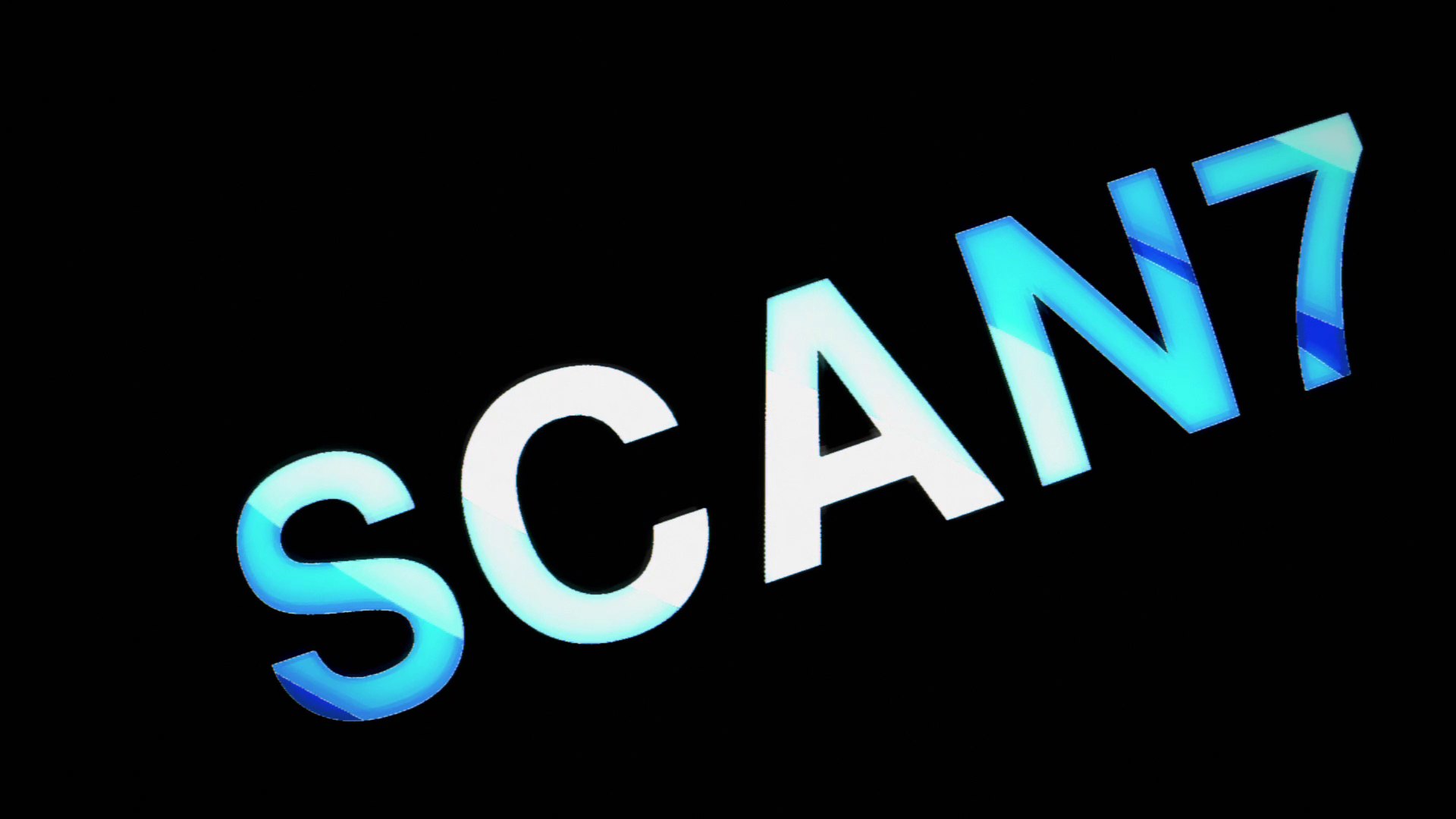
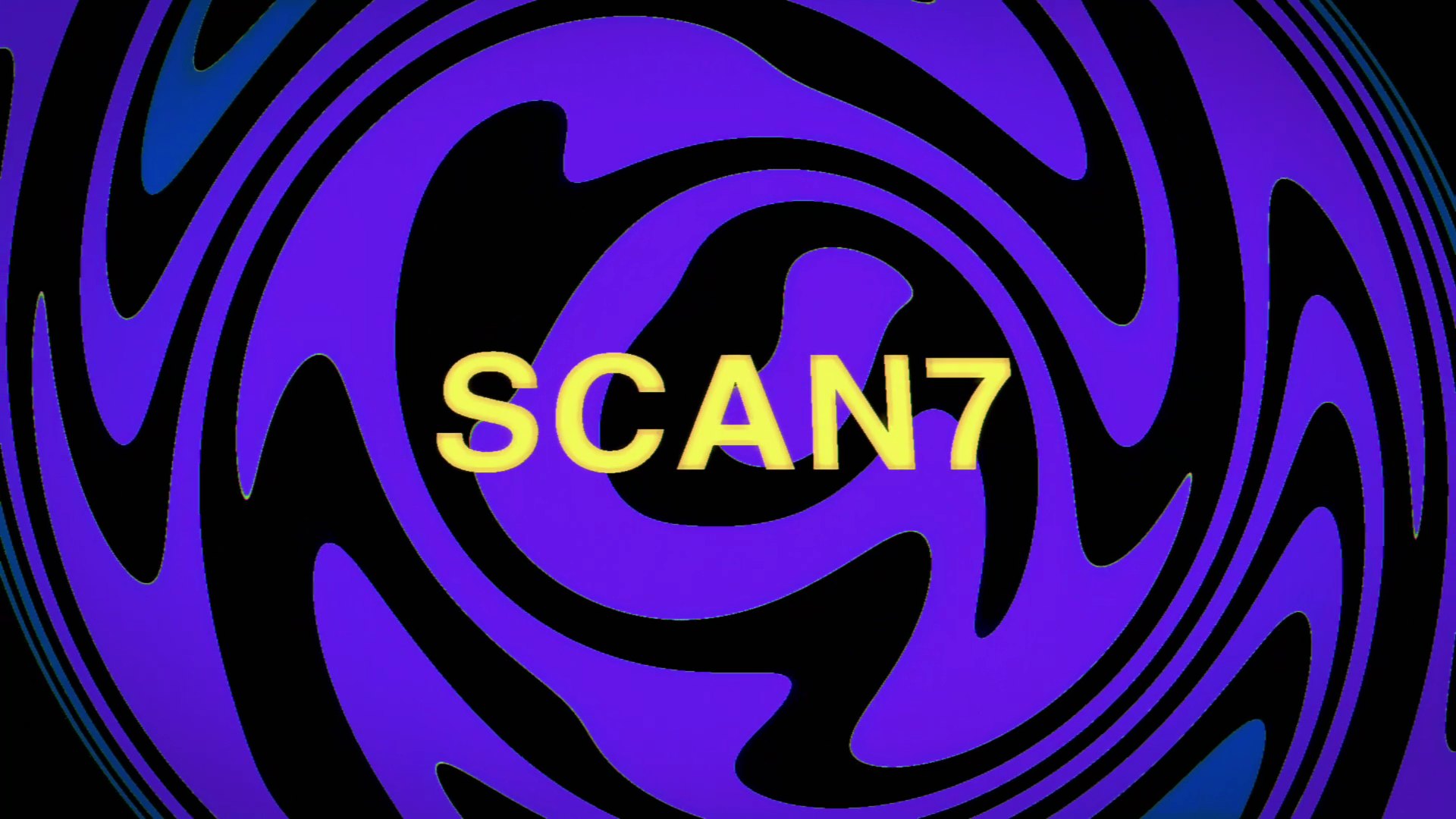
Outputs rendered by the engine, and the interface. Click to enlarge.


| Platform | macOS 14 Sonoma or later — Metal-capable Apple silicon and Intel Macs. Native application. |
|---|---|
| Inputs | Titles set in the app, MOV / MP4 / M4V video, image and PNG with transparency, camera, built-in patterns and shapes. |
| Output formats | 1080p, 720p, 4:3, PAL, NTSC, square, vertical. |
| Output | QuickTime .mov in H.264 or ProRes 422 / 4444; live REC; second-display output window. |
| Layers | Three layers A / B / C, a full chain each, blend by key, addition, screen, multiply. |
| Motion | 3 oscillators (15 axes) · A → B programmer with T-bar or automatic ramp. |
| Control | Knobs with typed values, double-click for default, command line. |
| Presets | 28 presets + your own — your text, font and files kept. |
| Language | English interface, French available. |
| Documentation | Presentation and tutorial PDFs in English, French and Spanish. |
| Licence | One key for two computers, single activation, works offline afterwards. |
Sandin FX, SCAN7 and RE7 recreate three machines that invented the electronic image: the Sandin Image Processor (1971), the Scanimate (late sixties) and the Rutt-Etra (1973). Three instruments, one approach: no timeline, no keyframes, knobs you play live, and a frame-by-frame export identical to what you see.