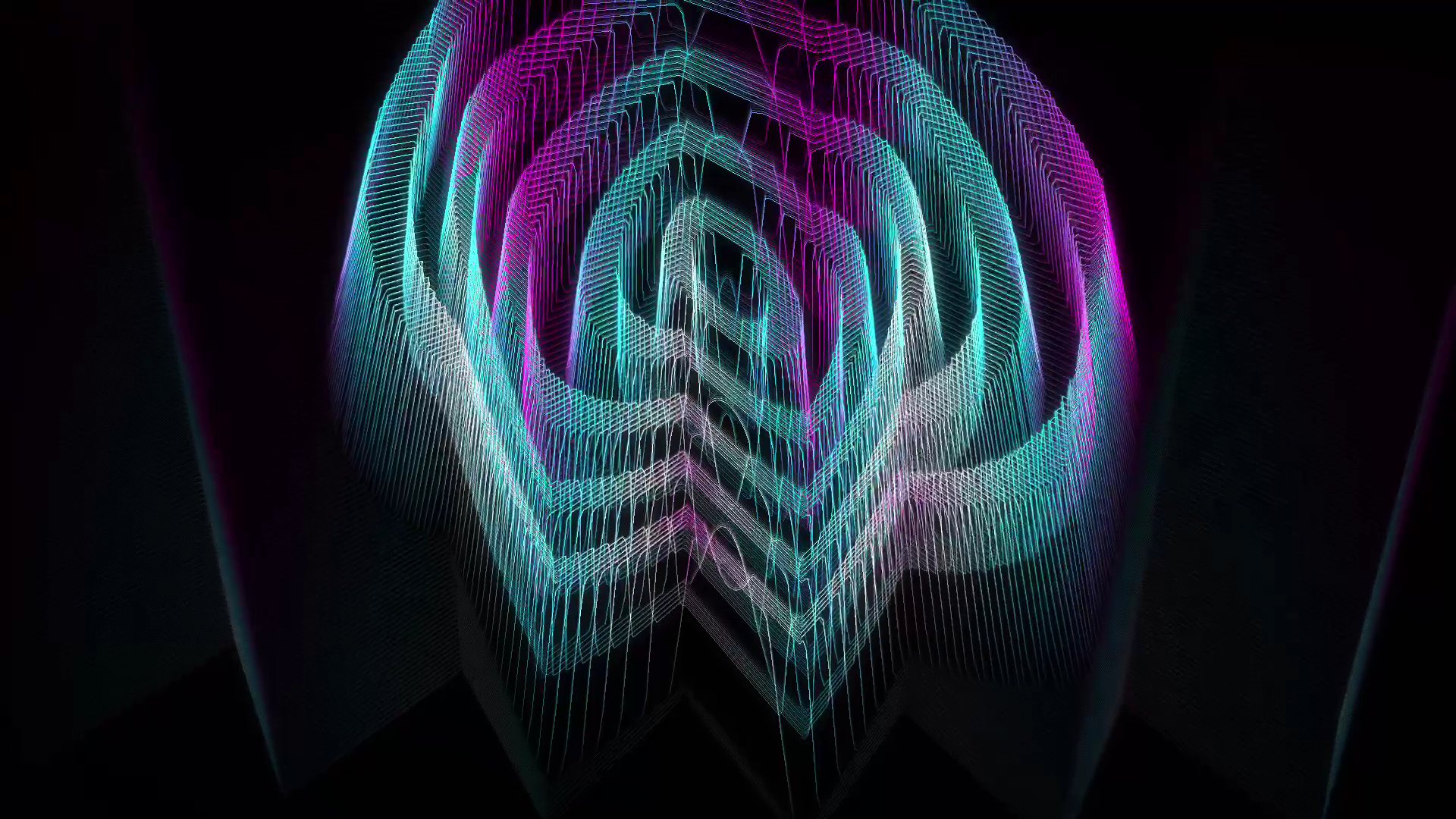
RE7 · Real time · 60 fps
RE7
The Rutt-Etra visual piano, on your Mac. Any video, image or camera becomes a mesh of scan lines that light lifts into relief — you stretch, twist and animate it live, then export exactly what you saw.
The Rutt-Etra visual piano, on your Mac. Any video, image or camera becomes a mesh of scan lines that light lifts into relief — you stretch, twist and animate it live, then export exactly what you saw.
In 1973 Steve Rutt and Bill Etra built an analog video synthesizer of a new kind. Rather than colouring or mixing the picture, it hijacked the scan signals of the cathode-ray tube: the lines rise where the image is bright, sink where it is dark, and the operator stretches, twists and rotates them by hand.
Bill Etra called it a "visual piano". The machine shaped video art, then the title sequences and music videos of the eighties. Only a handful of working units survive.
RE7 takes that principle as described in the 1974 RE-4 manual and runs it in real time on your Mac's GPU. Any source becomes a mesh of 8 to 720 lines at 0° or 90°, as a grid or a cloud of points.
Luminance lifts the lines upward and toward the viewer. Two waveform generators act on nine axes, three non-linear distortions complete the geometry, and the export is deterministic — identical to the preview.
English interface — French available
Each module takes a stage of the Rutt-Etra — or adds what the analog machine could not.
Any source — video, image, camera or test generator — becomes a mesh of 8 to 720 lines, as a grid or a cloud of points, with adjustable thickness and density.
Light lifts the lines upward and pushes them toward the camera: the image becomes a glowing wireframe relief, bright in front, dark behind.
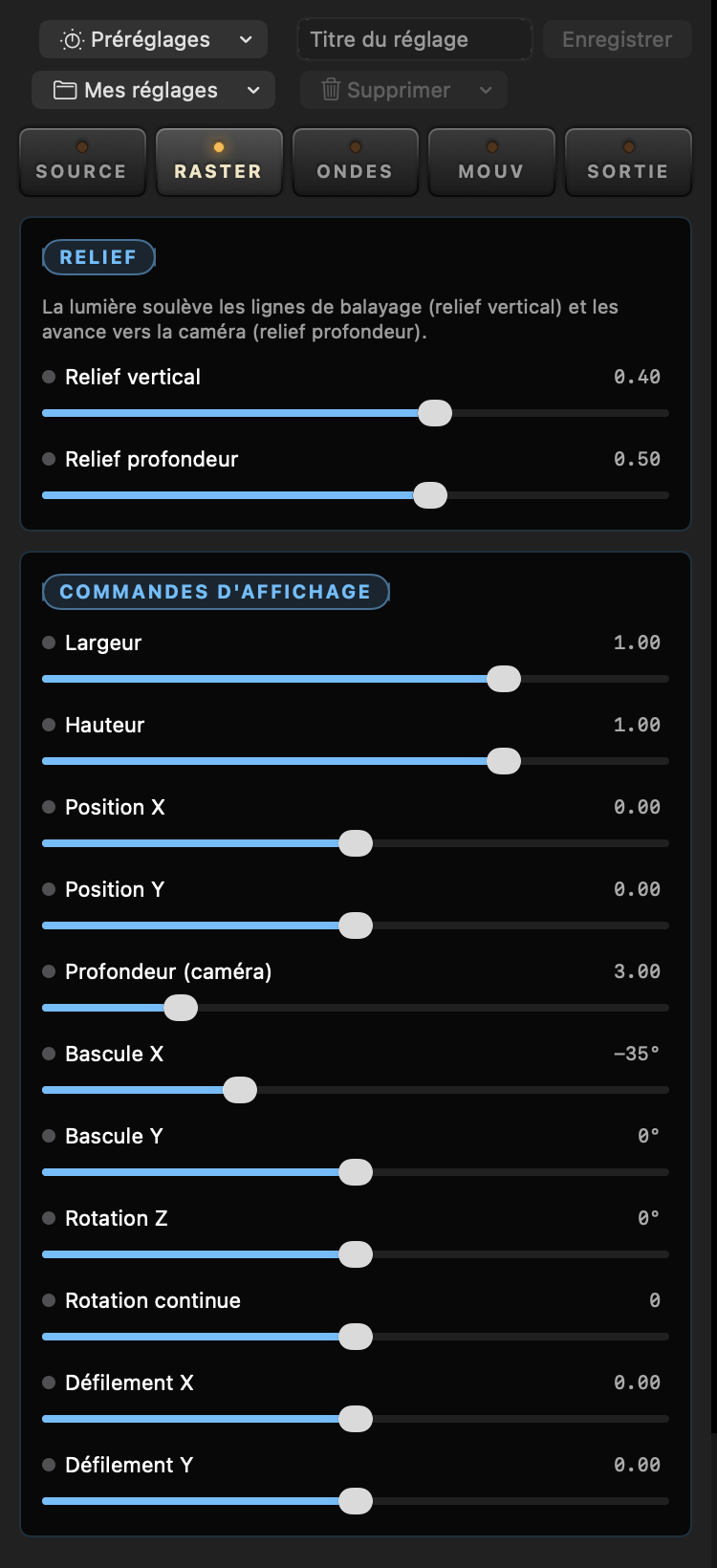
Width and height down to inversion or a single line, position, camera depth, X/Y/Z tilts, continuous rotation, scrolling — every Rutt-Etra display control is here.
Three non-linear distortions — twist, cylinder, sphere — to bend the mesh through space.
Sine, triangle, saw and square acting on nine different axes of the geometry and the signal.
Three LFOs modulate any parameter by addition, multiplication or replacement.
Two ramps play a start → end move, once, looped or back and forth. A step sequencer chains eight stored states at tempo, with glide.
Microphone, video soundtrack or audio file, split into four bands and routed to three parameters. It listens only with your permission.
Twelve palettes — green phosphor, P4, amber, blue… — driven by intensity or depth, with glow and persistence.
Scan lines, noise, vignette and tube curvature: the re-filmed monitor, to finish the path.
Your knob movements record as gestures, loop and apply to the export. Any USB-MIDI controller pairs in two steps; the Korg nanoKONTROL2 maps in one click.
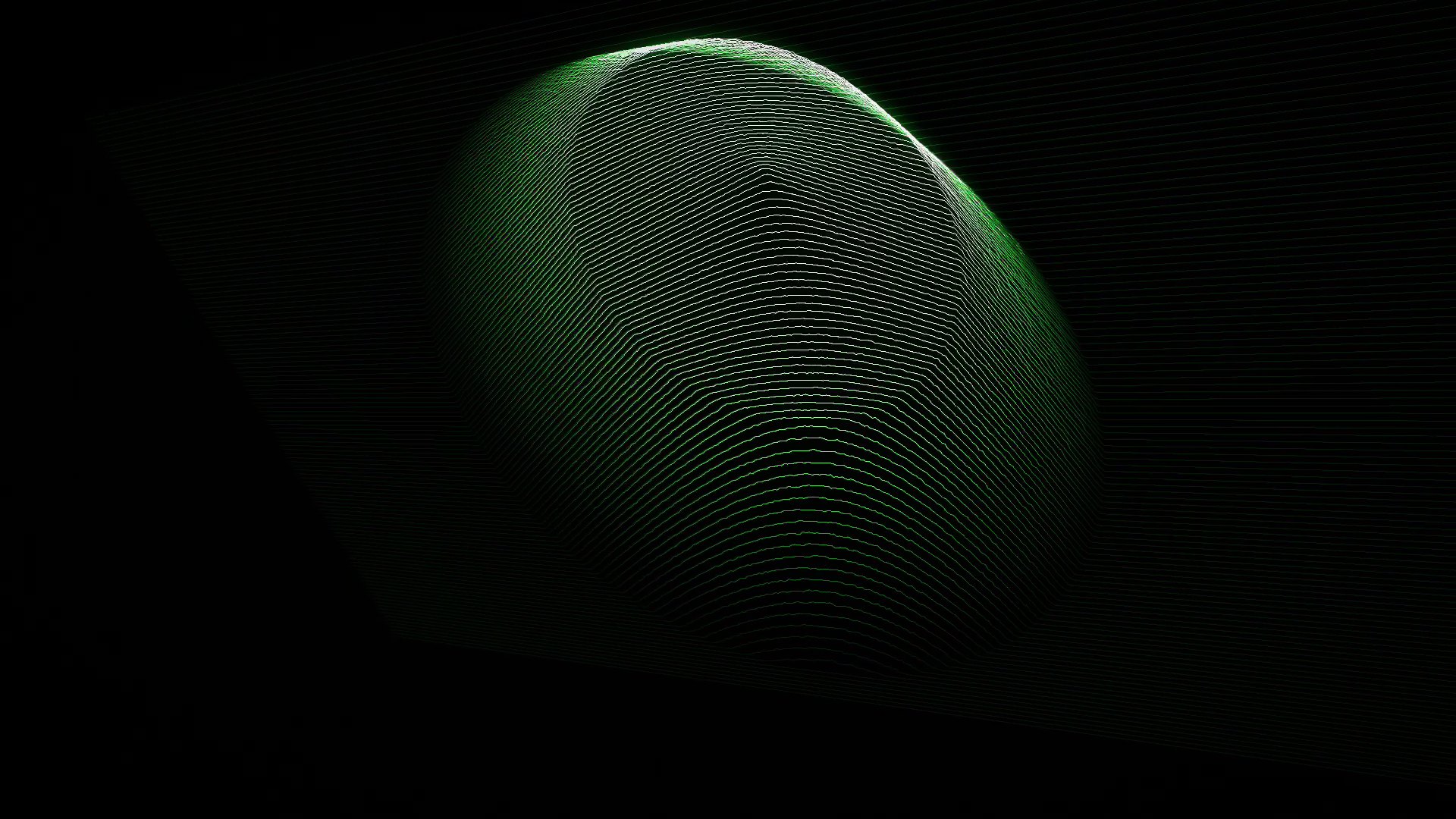
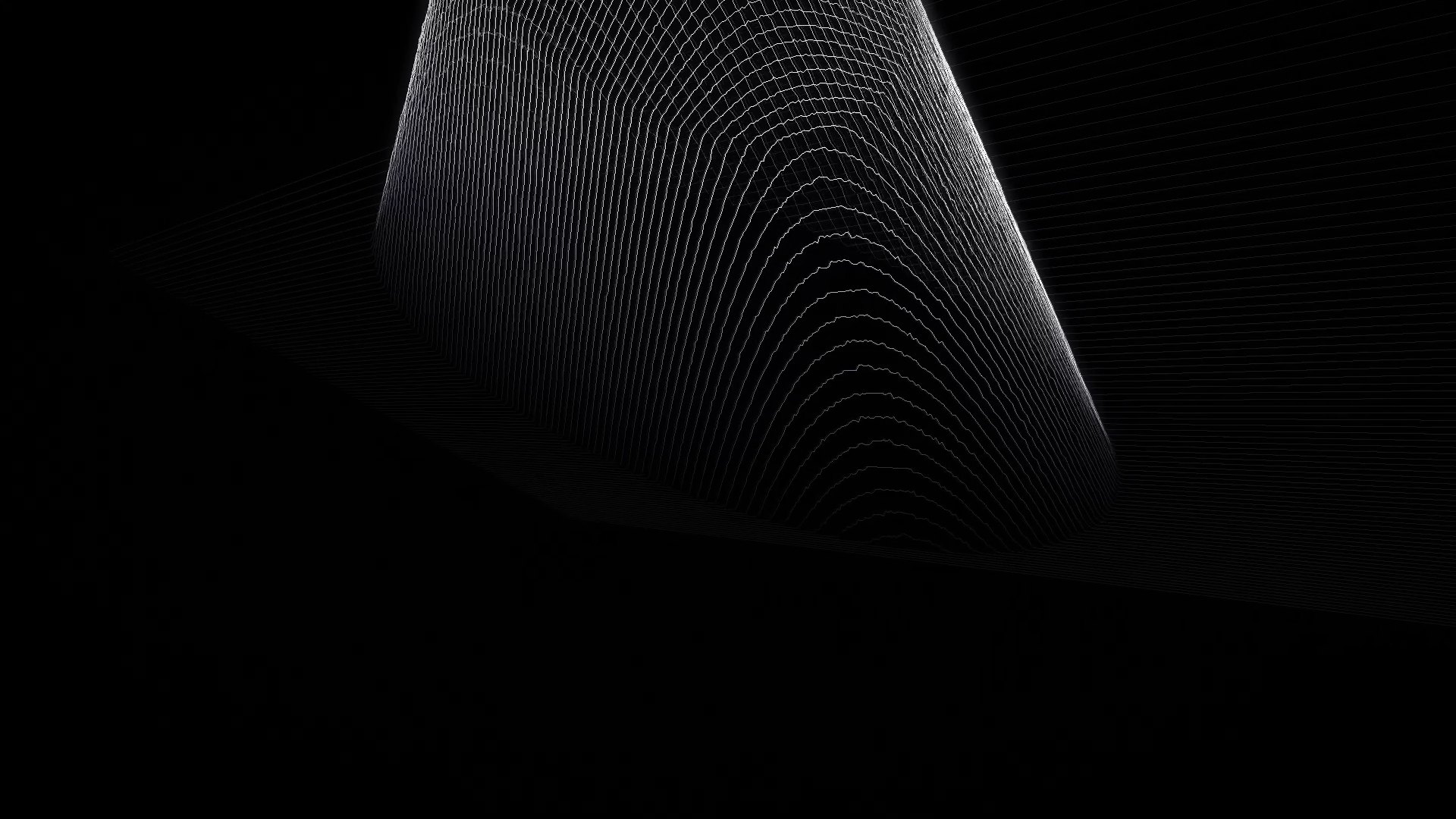
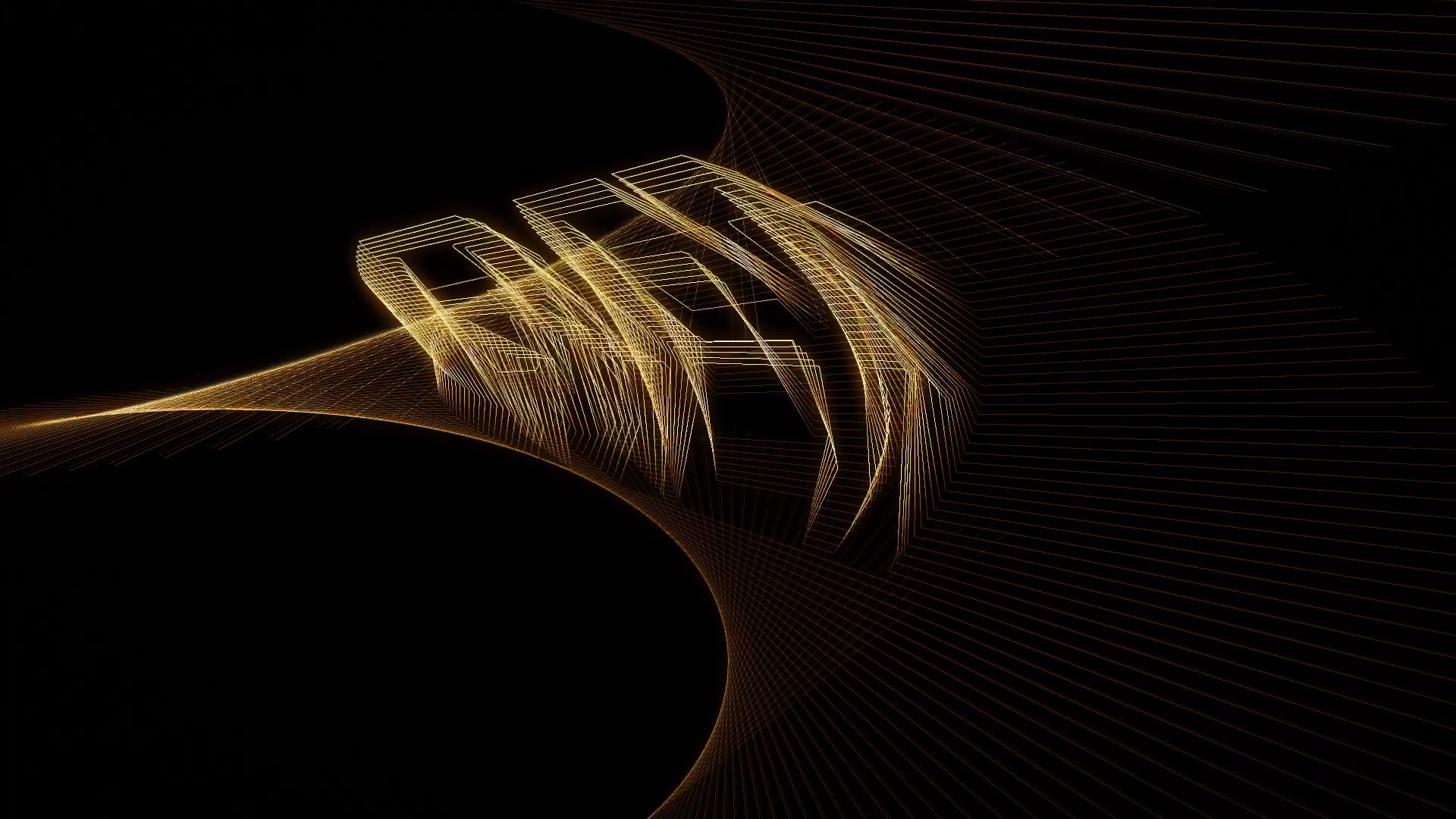
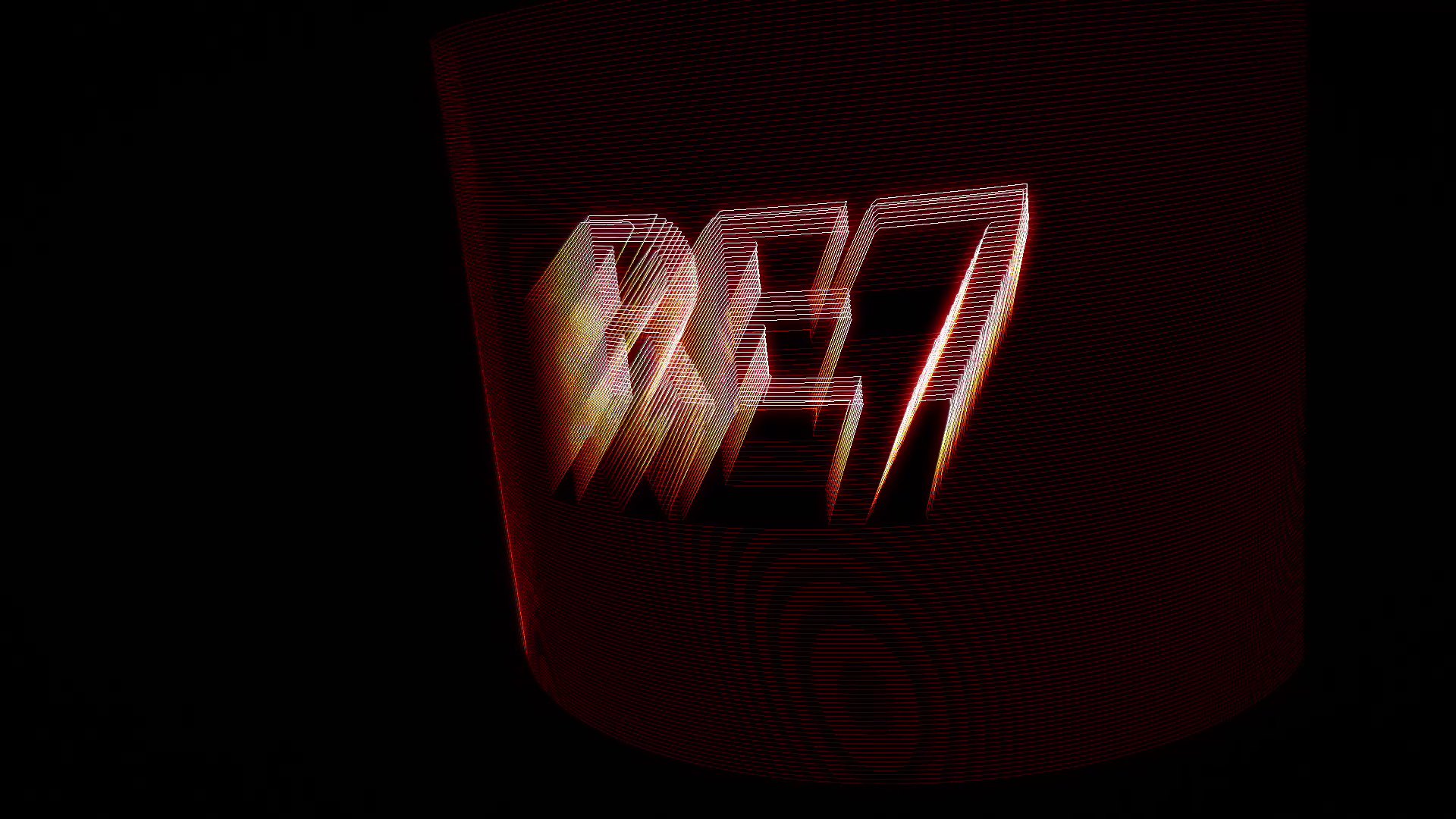
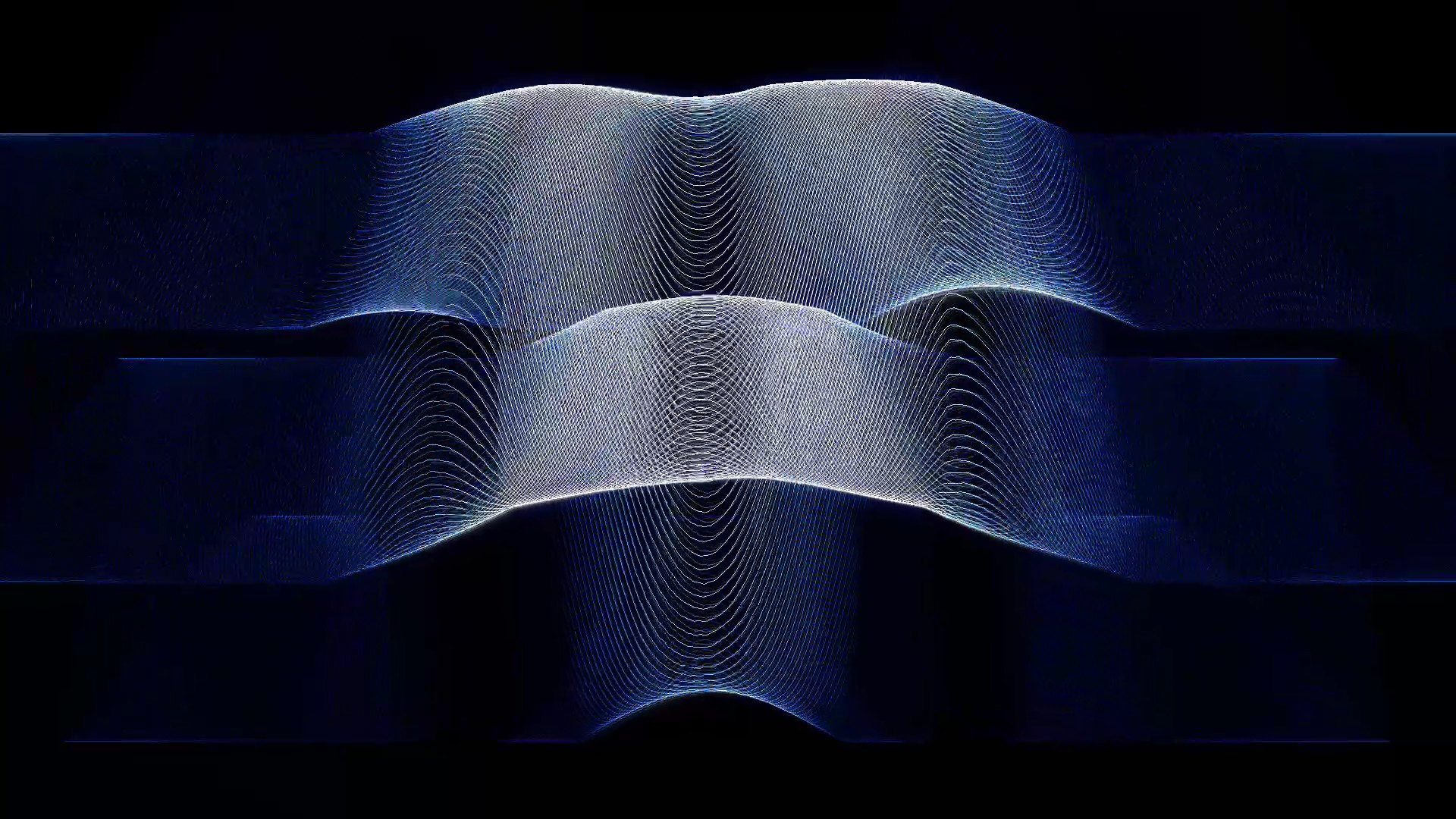
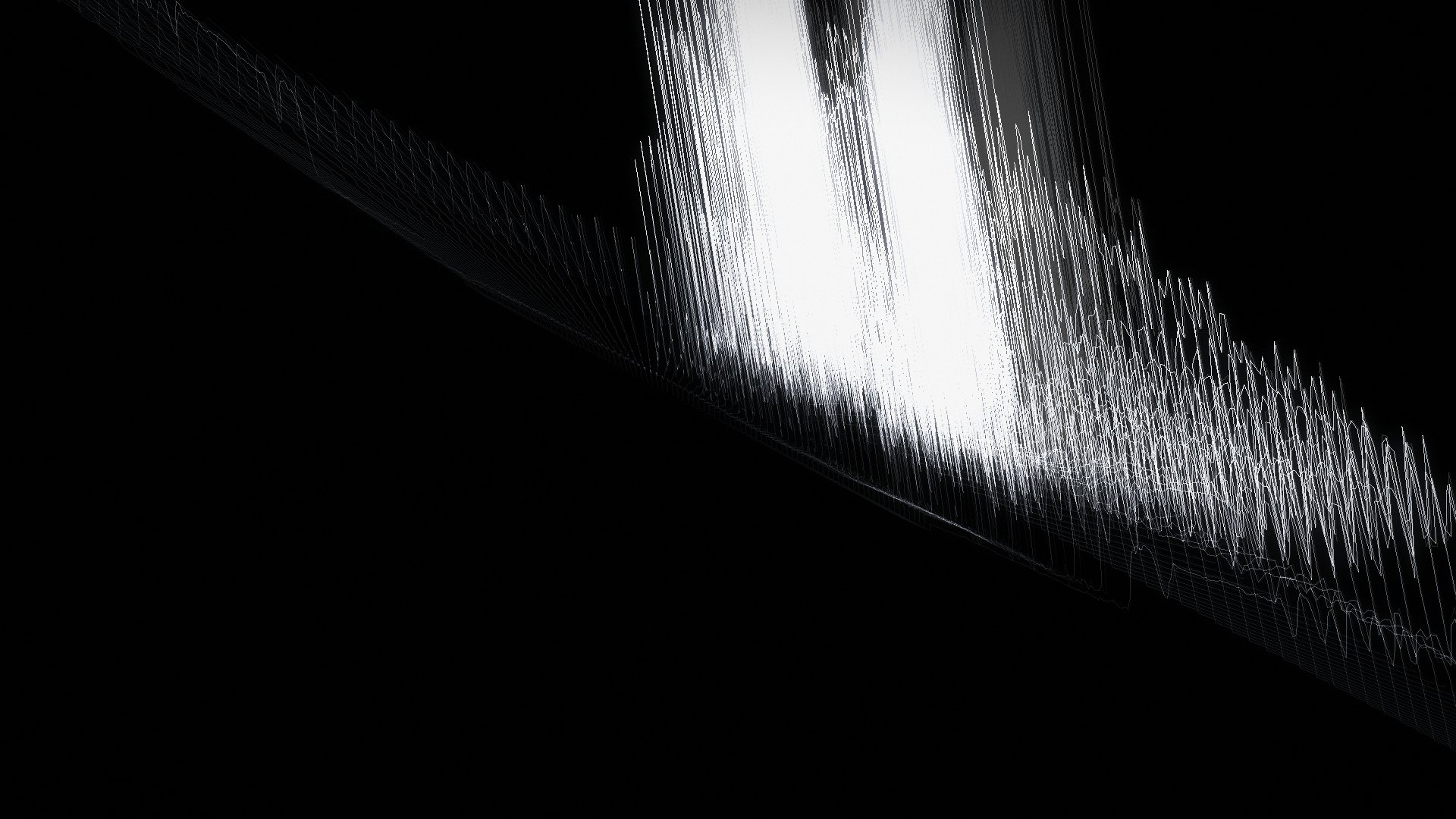
Outputs rendered by the engine, and the interface. Click to enlarge.
| Platform | macOS 14 Sonoma or later — Metal-capable Apple silicon and Intel Macs. Native application. |
|---|---|
| Inputs | MOV / MP4 / M4V video, image, camera, test generator; audio: microphone, video soundtrack, mp3 / m4a / wav / aiff file. |
| Mesh | 8 to 720 lines, 0° or 90°, grid or cloud of points; relief driven by luminance. |
| Output | QuickTime .mov in H.264 (three qualities) or ProRes 422 / 4444; live REC; second-display output window. |
| Modulation | 2 waveform generators (9 axes) · 3 LFOs · 2 ramps · 8-step sequencer · 4-band audio interface. |
| Control | MIDI Learn, pickup mode, one-click Korg nanoKONTROL2 mapping, command line. |
| Presets | 13 presets + your own — open files, gestures replayed on export. |
| Language | English interface, French available. |
| Documentation | Presentation and tutorial PDFs in English, French and Spanish. |
| Licence | One key for two computers, single activation, works offline afterwards. |
Sandin FX, SCAN7 and RE7 recreate three machines that invented the electronic image: the Sandin Image Processor (1971), the Scanimate (late sixties) and the Rutt-Etra (1973). Three instruments, one approach: no timeline, no keyframes, knobs you play live, and a frame-by-frame export identical to what you see.